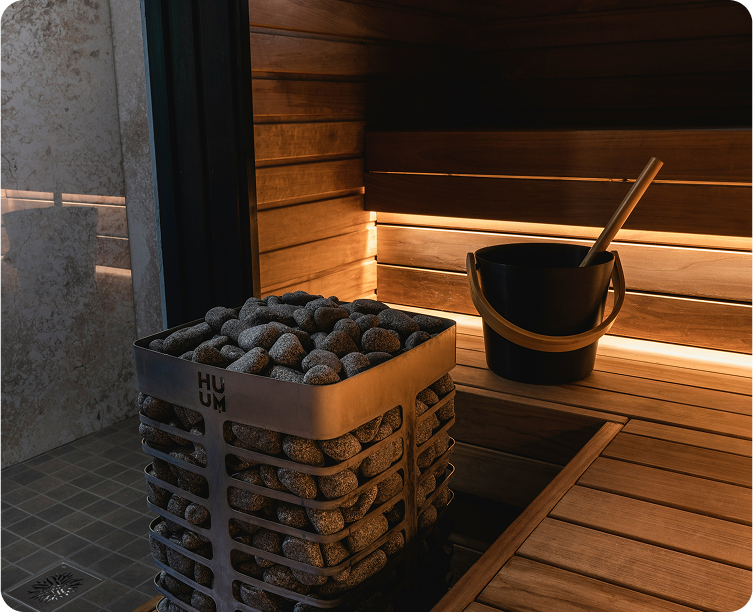
A wifi sauna heater is worth the upgrade when remote preheating removes the main obstacle to regular sauna use. The owner can start an approved electric heater from a phone after the room has been checked and the required safety state has been activated. The real value is the ability to prepare a verified, empty sauna through an approved controller and safety system, then monitor its status without repeatedly walking to the cabin.
The technology is not worthwhile for everyone. A sauna beside a bathroom may be easy to start manually, and a fixed weekly or local timer may cover a predictable routine. Wi-Fi also introduces app accounts, network coverage, firmware, cloud services, pairing, safety sensors, and troubleshooting. Buyers should compare the entire heater-and-control package rather than assuming connectivity is built into the heater body.
This guide explains remote operation, scheduling, safeguards, mobile apps, connectivity, electrical installation, ownership costs, failure modes, privacy, and suitable buyer profiles. It also examines Rodeo Wellness's actual premium configuration: HUUM DROP 6 kW and 9 kW heater upgrades paired with the Wi-Fi UKU controller. That combination should be sized and quoted as a coordinated system.
Quick Verdict
For a detached outdoor sauna, a connected heater is often worth it because remote preheating saves an exposed walk and makes a longer warm-up easier to incorporate into the day. It is especially useful for owners with irregular schedules, cold-climate properties, workout routines, and cabins located far from the house. Local physical controls must remain practical when the network or app is unavailable.
The upgrade is less valuable when the sauna is indoors, used only occasionally, started at the same time each week, or served by unreliable Wi-Fi. It is also a poor choice when the installation omits an approved door sensor or other required safety device. Connectivity should make a correctly designed sauna easier to use; it should never be used to work around inspection, clearance, or operating requirements.
|
Decision Factor
|
Wi-Fi Control Advantage
|
Potential Tradeoff
|
| Preheating |
Start an approved system before reaching the sauna |
Room must be checked and remote-start safety armed |
| Scheduling |
Fit warm-up into work, exercise, or evening routines |
Schedules need active household management |
| Monitoring |
View temperature and operating status remotely |
App data depends on sensors, network, and service |
| Connectivity |
Useful for detached cabins and longer warm-up |
Weak signal, router changes, or outages can interrupt access |
| Installation |
Clean separate panel and connected features |
Adds power unit, sensors, control wiring, and setup |
| Best buyer |
Frequent user who values readiness |
Occasional user may not recover the upgrade cost |
How We Evaluated Wi-Fi Sauna Heaters
This is a research-based commercial guide prepared for Rodeo Wellness readers. It does not claim physical testing of every heater or app. The analysis uses current HUUM UKU and Harvia remote-control documentation, official heater specifications, and practical residential installation factors that determine whether connectivity creates lasting value.
We weighted remote-start usefulness, scheduling, local fallback controls, safety hardware, room and heater compatibility, network requirements, app dependence, electrician scope, installation cost, ownership frequency, support, and privacy. Features vary by controller generation, market, subscription or license, attached equipment, and firmware, so the final product documentation controls.
Rodeo Wellness sells saunas and offers HUUM DROP upgrades with UKU Wi-Fi control. Readers should consider that commercial relationship. The recommendation is conditional: the upgrade is compelling when it improves a real routine and is installed as an approved system, but a simpler manual heater can be the smarter purchase for a nearby or infrequently used sauna.
What a Wi-Fi Sauna Heater Actually Is
The phrase commonly describes an electric sauna heater operated through a compatible connected controller. The heater elements do not necessarily contain the Wi-Fi radio. A system may include the heater, power unit, wall control panel, temperature sensor, door sensor or heater-mounted safety device, network module, mobile app, and optional outputs for lighting or ventilation.
This distinction matters during shopping. A heater advertised as Wi-Fi compatible may still require a separately purchased control package. A local controller may be upgradeable through software or replacement hardware, while another heater may not support remote operation at all. Compare model numbers and included components, not only the product-family name.
Wi-Fi control does not change the basic heating principle. A traditional electric heater still warms stones and room air and can produce steam when the manufacturer allows water on the stones. Connectivity changes when and where the owner issues commands and receives status information; it does not transform the heater into infrared or increase its approved output.
How Remote Start Works
A connected sauna is normally commissioned locally, paired to a network, linked to an account, and configured with required safety equipment. Before remote start becomes available, the owner checks that the room is empty, nothing is on or near the heater, the door is closed, and the system is placed into the manufacturer's approved remote-ready state.
The app sends a request through the network and service to the controller. The controller verifies its safety inputs and activates the heater only when conditions are satisfied. Temperature is regulated by the installed sensor and controller, not by a phone thermometer. The app may display target and current temperature, operating time, or readiness depending on the platform.
Remote start is not the same as unattended permission. Someone must maintain control of the situation, follow maximum operating times, and ensure that children, guests, cleaners, or stored items have not changed the room. A connected system cannot see every hazard unless the safety design specifically detects it.
The Value of Scheduling
Scheduling is the most practical reason to buy connected control. Traditional electric saunas need time to warm the air, wood, stones, and benches. Starting the process before a workout ends or before arriving home can turn a 60-minute wait into a ready session. Exact warm-up varies with heater, room, glass, weather, and target.
A mobile schedule is useful for routines that move from day to day. A fixed mechanical timer may work for a consistent evening, but an app lets the owner adjust without visiting the cabin. Weekly timers can serve regular patterns, while one-time starts can accommodate changing work or training sessions.
Schedules need discipline. A recurring event should not remain active when the sauna becomes storage, guests are present, maintenance is underway, or travel changes the household routine. The safest approach is to inspect and arm the system according to instructions rather than treating the schedule as permanent home automation.
Mobile App Controls
A sauna app may allow starting and stopping, selecting temperature, setting duration, viewing current temperature, receiving readiness notifications, managing schedules, and controlling compatible lights or ventilation. Available functions depend on the controller, market, wiring, and attached equipment. Marketing screenshots may show features that are not included in a particular installation.
The best app experience is secondary to reliable local operation. A wall panel should remain clear and accessible so the heater can be controlled when the phone is unavailable, the account is locked, the router is offline, or the cloud service is interrupted. Household members should know how to stop heating without an app.
Before buying, review app-store availability, supported phone versions, account requirements, shared-user access, update history, privacy terms, subscription or license structure, and the manufacturer's support path. Connected products evolve after installation, which makes software stewardship part of long-term ownership.
HUUM UKU Wi-Fi
UKU is HUUM's control ecosystem for compatible electric sauna heaters. UKU Wi-Fi combines local operation at a compact control panel with mobile access through the HUUM app when the controller is connected and configured. The system includes a power module, temperature sensor, and safety-related components according to the selected market package.
Current UKU documentation describes temperature adjustment, heating duration, Wi-Fi status, app connection, child lock, and optional control of a compatible lamp or ventilation load. The panel's simple knob-and-display interface keeps local operation central, which is important when connectivity fails.
HUUM also documents testing of the door sensor during commissioning. In the cited US manual, opening the door during the test is expected to disconnect the relays and display a door-open message. A certified electrician is directed to perform electrical testing. Exact behavior and requirements should be confirmed in the manual supplied with the current controller.
Rodeo Wellness HUUM Upgrade
Rodeo Wellness uses HUUM DROP 6 kW and 9 kW heaters with the Wi-Fi UKU controller for heater upgrades. This is important because the connected feature belongs to a premium heater-and-control configuration, not a generic plug-in accessory. Buyers should see every included component on the quote.
The DROP 6 and DROP 9 share the heater's sculptural wall-mounted stone-basket design and a published 55-kilogram stone capacity, but they serve different room and electrical requirements. The correct option follows adjusted room volume, glass, insulation, log construction, site voltage, climate, and manufacturer approval—not simply the number of people shown in the sauna name.
Ask whether the upgrade includes the UKU power unit, Wi-Fi panel, temperature sensor, door sensor, stones, safety railing, heat-resistant cable, and the DROP 9 heat-guiding components currently specified by HUUM. Also confirm electrician labor, circuit changes, app setup, commissioning, and post-sale support.
|
Rodeo Upgrade
|
Best Starting Fit
|
Key Confirmation
|
| HUUM DROP 6 kW + UKU Wi-Fi |
Approved small or medium adjusted room |
Voltage-specific room range, circuit, stones, rail, sensors |
| HUUM DROP 9 kW + UKU Wi-Fi |
Approved larger or glass-heavy room |
Higher electrical load, heat-guiding parts, clearances |
| Standard heater package |
Buyer prioritizing simplicity and value |
Included controls, stone capacity, local operation, room match |
Harvia Connected Controls
Harvia offers connected operation through compatible Xenio Wi-Fi and newer Fenix control systems with MyHarvia. Current documentation describes functions such as heater control, temperature, lighting, ventilation, timers, and door-sensor status depending on the attached system. Product compatibility must be checked by model and control generation.
Harvia states that Wi-Fi solutions include a safety component and describes a process in which the user closes the sauna door and activates remote-start readiness locally. Its door-switch guidance explains that opening the door can cancel remote-ready status. This reinforces the core principle: remote convenience begins with a physical inspection.
Harvia's current MyHarvia 2 ecosystem also includes feature tiers for some products, making license or subscription details relevant. Buyers should confirm which functions remain included, which require payment, and whether the selected heater and controller can use the desired tier.
Safety Is the Deciding Factor
A sauna heater operates near combustible wood at high temperature. Remote control removes the person from the room at the moment heating begins, so safeguards are essential. The controller, heater, sensor, door switch or safety device, wiring, clearances, guard, and operating procedure must be approved as one system.
A door sensor can determine whether the door has opened after the room was armed. It cannot necessarily identify a towel placed on the heater through another route, a moved bench item, a pet, or every installation hazard. Some heaters use an additional safety switch or integrated device that detects objects above the heater. Follow the exact system requirements.
Never bypass a sensor because it interrupts remote start. Repeated errors can indicate alignment, wiring, configuration, network, or safety-state problems that require diagnosis. The correct response is local inspection and qualified service, not defeating the feature.
A Safe Remote-Start Routine
Inspect the room, remove every combustible or stored item, confirm vents and guards are unobstructed, close the door, activate remote readiness locally, and use the app only within the permitted time and temperature settings. Recheck the room after cleaning, guest use, maintenance, or any period when its condition is uncertain.
Door Sensors and Heater Safety Devices
Door switches are common because the door is the main entry point after the user has inspected the sauna. If it opens, the system can cancel or block remote operation until the room is checked and armed again. Installation location, sensing distance, cable, configuration, and testing are specified by the manufacturer.
Heater-mounted safety devices address objects placed over the stone basket. Harvia Spirit, for example, is offered in configurations with integrated safety functions for remote operation. The exact device and controller must be compatible. A general claim that the heater is smart does not prove that every required safety component is included.
Safety hardware can affect placement and appearance. Door sensors need aligned surfaces and protected wiring. Heater switches and rails need clearance. These components should be included in the design drawing before installation rather than added after the cabin is finished.
Connectivity Requirements
A detached outdoor sauna can be a difficult network location. Wood walls, foil insulation, metal roofing, stone, distance, terrain, and exterior walls between the router and cabin can weaken the signal. The phone showing one bar at the site does not prove that a permanently mounted controller will connect reliably.
Test the network at controller height with doors closed and the house operating normally. Confirm the supported Wi-Fi band; many connected controls rely on 2.4 GHz because it generally offers broader coverage and device compatibility. Harvia's Xenio troubleshooting currently specifies 2.4 GHz and identifies router configuration and required ports as possible pairing factors.
If coverage is weak, a properly designed mesh node or access point may help. Place networking equipment where it is rated for the temperature and weather and keep consumer hardware out of the hot room unless approved. Hardwired backhaul can improve a distant outdoor installation where feasible.
What Happens When Wi-Fi Fails
The heater should remain controllable locally according to its design. A network outage may prevent app commands and status updates without disabling the wall panel. The owner should understand what happens to an active heating cycle, scheduled event, stored settings, and remote-ready state when power or internet returns.
Cloud-service outages, app updates, changed router passwords, replacement phones, account access, and firmware updates are ordinary connected-device issues. None should make it difficult to stop the heater at the panel or breaker in an emergency. Document the sauna ID, account ownership, installer settings, and support contacts.
A useful buying test is whether the system remains a good sauna without Wi-Fi. If the local control is intuitive and the heater-room match is strong, connectivity is a convenience layer. If the entire experience feels dependent on a fragile app, reconsider the configuration.
Installation Requirements
A Wi-Fi controller does not simplify the high-voltage installation. Traditional electric heaters commonly require a dedicated hardwired circuit, and the controller may use a separate power unit, sensor, safety inputs, control cable, and auxiliary outputs. A licensed electrician should work from the precise heater and controller manuals.
The installation plan should identify panel capacity, voltage, breaker, conductor, disconnect, grounding, outdoor or underground wiring method, control-unit environment, sensor location, door-sensor wiring, lighting and ventilation loads, and inspection. Long trench runs or panel upgrades can cost more than the connected-control premium.
Control and sensor cables should be routed before the wall or cabin is closed. Their separation from power wiring, maximum lengths, temperature ratings, and penetrations follow the manual. Retrofitting Wi-Fi later may be possible for some systems, but it can require control replacement, new safety devices, or access to concealed wiring.
Heater Sizing Still Comes First
Connectivity cannot compensate for an undersized heater. Calculate the finished interior volume, then apply the manufacturer's adjustments for panoramic glass, masonry, log walls, insulation, ceiling height, and other heat-storing or non-insulated surfaces. Select a heater inside the approved range at the site's actual voltage.
This is especially important for Rodeo's DROP 6 and DROP 9 upgrades. A buyer may assume 9 kW is the smarter choice because it sounds faster, but a heater above the approved room range can create control and safety problems. Conversely, a 6 kW unit at the edge of a glass-heavy outdoor room may produce disappointing warm-up.
Obtain written confirmation of the final heater-room pairing before the circuit is installed. The quote should specify model number, output at voltage, controller, stones, safety equipment, and adjusted room calculation. Wi-Fi is the last layer, not the sizing method.
Scheduling and Warm-Up Expectations
The value of remote start grows with warm-up time. A high-stone heater may need more preparation than a small conventional basket, especially from a cold outdoor start. Scheduling allows that time to occur before the user is ready, making a premium stone experience more practical on weekdays.
Do not treat the app's ready notification as proof that every bench and stone is fully heat-soaked for the preferred steam. Sensors measure a particular location. Owners learn how displayed temperature relates to bench comfort and stone response in their room. This is an operating calibration, not a reason to move the sensor from its approved position.
Start with conservative schedules and observe actual warm-up across seasons. Record outdoor temperature, target, elapsed time, and whether the session felt ready. Adjust within the manufacturer's permitted settings. This produces more useful expectations than a universal claim that every connected heater is ready in a fixed number of minutes.
Temperature Control and Monitoring
Connected controllers make target adjustment and status monitoring convenient. They can show whether the heater is active and report sensor temperature. Some systems provide notifications or heating-time estimates. These features are valuable when the cabin is outside or on another floor.
The reading is only as good as sensor placement and calibration. Incoming ventilation air, doors, glass, corners, ceiling geometry, and heater location affect local temperature. The sensor also serves safety and control functions, so it must be installed according to the diagram rather than moved to make the app match a bench thermometer.
Remote monitoring does not replace presence during use. The user still needs to assess comfort, steam, hydration, and safe behavior. A number on the phone cannot detect dizziness, a blocked vent, or unusual sound unless the system specifically monitors it.
Lighting and Ventilation Integration
Some control packages can switch compatible lighting or ventilation loads. This can create a cohesive routine: begin heating, prepare low interior light, and run an approved drying cycle after use. The exact output rating and wiring must match the equipment, and sauna ventilation design should not be improvised as a smart-home feature.
UKU documentation describes an optional vent or lamp function for devices connected to designated outputs within stated limits. Harvia systems list lighting and ventilation control among supported functions depending on attached equipment. Buyers should ask which functions are actually wired in the quoted sauna.
Automatic drying can support maintenance but does not replace opening vents, wiping standing water, or leaving the room as directed. A controller should operate the ventilation strategy designed by the sauna and heater professionals, not determine that strategy after construction.
App Privacy and Account Ownership
A connected sauna creates operational data such as account details, device identifiers, settings, schedules, and status. Review the manufacturer's privacy policy and account-recovery process. Use a unique password, enable available account protections, and keep the home network maintained.
The homeowner—not the installer, builder, previous owner, or short-term guest—should ultimately control the primary account. Document how access is shared and removed. During resale, factory reset and transfer should follow the manufacturer's process so former users cannot retain control.
Avoid unofficial integrations that bypass safeguards or expose control credentials. Smart-home experimentation is not worth weakening a high-temperature appliance's supported security and safety model. Use manufacturer-approved connections and keep firmware current according to guidance.
Reliability and Long-Term Support
Wi-Fi adds software and network dependencies to an otherwise straightforward electric heater. Before buying, identify who supports the heater, power unit, panel, app, safety devices, and installation. A seller may handle warranty parts while the electrician handles wiring and the network provider handles coverage.
Ask whether local operation continues without cloud access, whether firmware updates are automatic, how long the app is supported, and which replacement panels or modules are available. Product families can outlast phone platforms, so replaceable controls and documented compatibility matter.
Rodeo buyers should confirm whether Rodeo Wellness coordinates HUUM UKU support and which issues go to HUUM or the installer. Keep invoices, serial numbers, manuals, room calculations, wiring diagrams, photographs, and commissioning records. Good documentation shortens troubleshooting.
Maintenance
Wi-Fi controls do not reduce physical heater maintenance. Stones still crack and settle, elements need airflow, vents need cleaning, benches need care, and the room must dry. HUUM DROP's 55-kilogram stone load requires individual placement and periodic inspection according to the manual.
Connected components add sensor alignment, panel condition, app updates, network credentials, and safety-device testing. Verify the door switch after service or adjustment. Investigate repeated connection or safety errors rather than simply resetting the system until it starts.
A yearly ownership review can include stone condition, heater guard, clearances, sensor, door alignment, controller logs or errors, ventilation, circuit condition, app access, shared users, and manuals. Electrical repairs and testing belong to qualified professionals.
Cost and Value
The connected premium includes more than a Wi-Fi radio. It may cover a separate control panel, power unit, temperature sensor, door sensor or heater safety device, additional wiring, commissioning, app ecosystem, and a higher-tier heater. Installation can amplify the price difference.
Value should be measured in sessions used, not features owned. If remote preheating turns a once-a-month sauna into a three-times-a-week routine, the upgrade may be worthwhile. If the owner walks past the controller on the way home and uses the sauna occasionally, a manual timer may deliver nearly the same utility.
Compare complete quotes. For Rodeo, place the standard package beside DROP 6 plus UKU Wi-Fi and DROP 9 plus UKU Wi-Fi where each is approved. Normalize stones, controls, safety rail, sensors, electrical work, breaker changes, and warranty. Then decide whether design, stone mass, and connectivity justify the premium together.
Energy Use
Wi-Fi does not inherently make a heater more efficient. It can reduce wasted waiting if the user starts at the right time and stops a session remotely when permitted, but it can also increase consumption if scheduled starts run when no one bathes. Heater output, room loss, warm-up, thermostat cycling, and behavior determine energy use.
Some connected systems provide usage or energy information, but feature availability varies. Treat estimates as planning data rather than utility-grade measurement unless documented otherwise. The most reliable saving is avoiding unnecessary heat cycles.
Use notifications and schedules deliberately. Remove obsolete recurring events, set the permitted operating duration, and do not start far earlier than needed. A correctly sized heater in a well-built room remains the foundation of efficient operation.
Best Buyer Profiles
Owners of Detached Outdoor Saunas
This is the strongest use case. Remote start prevents repeated trips through rain, snow, darkness, or a large yard. Network coverage and an all-season safe route still need planning.
Frequent Weekday Users
Connected scheduling fits exercise, work, and evening routines. The value is highest when waiting currently causes skipped sessions and the household will use the system several times a week.
Cold-Climate Homeowners
Outdoor warm-up can be longer in winter. Remote preparation makes the sauna more convenient, although heater sizing, glass, insulation, snow, and path safety remain critical.
Owners Choosing High-Stone Heaters
A large stone mass may reward a thorough warm-up. Scheduling supports that experience. HUUM DROP buyers can benefit when UKU control turns the longer preparation into a background process.
Households With Changing Schedules
App control is more flexible than a fixed timer when work and exercise times vary. Shared-user management should be clear so two people do not create conflicting schedules.
Technology-Oriented Buyers
Buyers comfortable with apps, routers, updates, sensors, and troubleshooting may appreciate the system. They should still demand reliable local controls and supported safety hardware.
Who Should Skip the Upgrade
Occasional Sauna Users
A monthly user may not recover meaningful convenience from the added system. Spend first on heater sizing, benches, ventilation, and construction quality.
Indoor Sauna Owners With Easy Access
When the panel is steps from a bathroom or gym, local control may be nearly as convenient. A basic delayed-start timer may cover the routine.
Properties With Unreliable Internet
Weak coverage creates frustration and support work. Improve the network first or select a strong local-control system that does not depend on connectivity.
Buyers Seeking the Lowest Maintenance
Connected controls add accounts, updates, sensors, and network configuration. A quality manual heater has fewer digital dependencies.
Rental Hosts Without a Control Policy
Remote operation and guest access need supervision, documentation, and rules. A connected heater is not automatically safer for unfamiliar users.
Wi-Fi vs Built-In Timer vs Manual Controls
Manual controls are direct and robust. The user visits the heater, sets time and temperature within the available design, and confirms the room physically. They are inexpensive and easy to explain but provide no remote status.
A built-in delayed-start timer can prepare the sauna without an app. It suits predictable routines and avoids network dependence, but setting it usually requires local access and may provide limited feedback. Safety conditions still apply.
Wi-Fi offers the most flexible scheduling and monitoring. It is the best convenience tool for a remote cabin, but also the most complex. The correct hierarchy is safe local control first, useful scheduling second, and app polish third.
|
Control Type
|
Best For
|
Main Limitation
|
| Manual dials |
Simple local use and lowest digital complexity |
No remote readiness or status |
| Delayed-start timer |
Predictable routines without app dependence |
Less flexible and still requires careful room preparation |
| Wi-Fi controller |
Detached sauna, variable schedules, remote monitoring |
Network, account, safety system, and higher cost |
A Complete Buying Checklist
Start with heater-room compatibility, then evaluate controls. No connected feature can correct the wrong output, unsafe clearances, poor ventilation, or inadequate electrical service. Obtain the current heater and controller manuals before the quote is finalized.
-
Heater Match: Verify adjusted room volume, glass, insulation, voltage, and approved output.
-
Included Hardware: List the panel, power unit, sensor, door switch, safety device, stones, railing, and cables.
-
Local Control: Confirm full start, stop, and temperature operation without the app.
-
Network: Test 2.4 GHz or other required coverage at the installed panel location.
-
Remote Safety: Understand inspection, arming, door-opening, fault, and reset behavior.
-
Software: Review app support, user sharing, updates, privacy, and any paid feature tier.
-
Professional Scope: Price the circuit, trenching, controller wiring, sensors, permits, and commissioning.
-
Support: Identify who handles app, heater, control, wiring, and warranty issues.
Ask the installer to demonstrate local use, remote arming, app start, door-sensor interruption, fault behavior, and shutdown. Save the final diagrams and account-transfer process. Commissioning is part of the purchase, not an optional tutorial.
Common Buying Mistakes
Assuming Wi-Fi Is Inside the Heater
Many systems use a separate controller and power unit. Confirm every required component and its compatibility with the heater model.
Choosing 9 kW for Faster Heat
Output follows the approved adjusted room range. A larger heater can change circuit and clearance requirements and may be unsuitable for the room.
Skipping the Physical Safety Check
Remote readiness depends on an inspected, empty room. Sensors supplement this check; they do not replace it.
Ignoring the Outdoor Signal
Test coverage at the actual controller location with doors closed. Plan mesh or access-point improvements before installation.
Treating the App as the Only Control
Local operation should remain clear and accessible during phone, network, account, or cloud problems.
Forgetting Paid Features
App tiers and licensing can change the cost. Verify which functions are included for the selected system and market.
Comparing Upgrade Prices Without Installation
Normalize controls, sensors, stones, railings, circuit changes, wiring, labor, and commissioning before judging value.
Frequently Asked Questions
Is a Wi-Fi Sauna Heater Worth It
It is worth it for frequent users, detached outdoor saunas, variable schedules, and longer warm-up routines. It is less valuable for occasional use or a sauna located beside the living area.
Can I Turn My Sauna On From Anywhere
Compatible systems can allow remote start through an app, but only when the controller is online, the safety state is armed, required sensors are satisfied, and manufacturer rules are followed.
Is Remote Sauna Start Safe
It can be safe when the approved heater, controller, door sensor or safety device, installation, and operating procedure are used together. The owner must inspect the room before arming remote start.
What Does a Door Sensor Do
It detects whether the sauna door opens and can block or cancel remote-ready status. It does not detect every possible object or hazard inside the room.
Does a Wi-Fi Heater Work Without Internet
Local panel operation generally remains available, but app control and cloud features may not. Confirm exact outage behavior for the controller.
Does It Require 2.4 GHz Wi-Fi
Many sauna controllers do, including current Harvia Xenio guidance. Confirm the requirement for the exact UKU or other control version and test signal at the installation point.
Can I Add Wi-Fi Later
Some control systems support upgrades, but compatibility, safety hardware, wiring, licensing, and labor vary. Planning connectivity during construction is usually cleaner.
Does Wi-Fi Make the Sauna Heat Faster
No. It lets heating start earlier. Warm-up speed is determined by output, room construction, glass, stone mass, ventilation, weather, and target temperature.
Can I Schedule the Sauna Every Day
Compatible systems may support schedules, but recurring operation must follow safety procedures and household oversight. Disable schedules when the room's condition is uncertain.
Can More Than One Person Use the App
Shared access depends on the platform. Establish account ownership and remove former users after guests, contractors, rentals, or resale.
Does Rodeo Wellness Offer Wi-Fi Heaters
Rodeo Wellness offers HUUM DROP 6 kW and 9 kW heater upgrades paired with the Wi-Fi UKU controller. The correct output and included parts depend on the sauna and current quote.
What Is the Difference Between DROP 6 and DROP 9
They serve different approved room and electrical requirements. Both use the DROP design and 55-kilogram stone capacity, while current DROP 9 information includes additional heat-guiding components.
Is UKU Wi-Fi Better Than MyHarvia
Both support connected sauna control in compatible systems. Compare heater compatibility, safety devices, local controls, app features, licensing, network requirements, support, and installer familiarity.
Can Wi-Fi Control Sauna Lights and Ventilation
Some systems can control compatible auxiliary loads when correctly wired and configured. Verify exact ratings and included functions; do not redesign ventilation around app capability.
Will a Power Outage Restart My Sauna
Behavior varies by system and settings. Review the manual and commissioning demonstration for power-loss memory, schedules, safety state, and restart behavior.
Is a Smart Sauna Better for Rentals
Remote monitoring can help an owner, but guest safety, access control, instructions, supervision, commercial requirements, and liability must be addressed. Connectivity alone is not a rental-safety plan.
Editorial Review and Primary Sources
This article was reviewed against current manufacturer information on September 9, 2026. Controller generations, app functions, subscriptions, safety requirements, heater specifications, and availability can change. Confirm all details for the exact market package before publication or purchase.
HUUM UKU Wi-Fi official product information
HUUM UKU US operating manual
HUUM DROP official specifications
Harvia MyHarvia remote-control information
Harvia Xenio Wi-Fi remote kit
Harvia door-switch setup guidance
Internal Linking Note
Link this guide to HUUM versus Harvia, electric versus wood-burning heaters, heater sizing, outdoor electrical planning, ventilation, panoramic glass, and capacity guides. Keep this page focused on connected controls and buyer value so it supports rather than competes with brand-comparison content.
Final Thoughts
A wifi sauna heater is valuable when it turns warm-up into background time and makes a properly designed sauna easier to use. The strongest case is a detached outdoor cabin, a variable routine, a cold climate, or a high-stone heater that benefits from deliberate preparation. The weakest case is occasional use with easy local access.
Safety and local control matter more than app design. The room must be inspected, the approved remote-ready state must be armed, and door sensors or heater safety devices must work as intended. Network coverage, account ownership, firmware, and support should be planned like any other connected home system.
For Rodeo Wellness buyers, compare the standard package with the complete HUUM DROP 6 kW or 9 kW and UKU Wi-Fi upgrade. Confirm sizing, voltage, stones, railing, sensors, power unit, wiring, commissioning, and support. When those pieces are coordinated, the upgrade can improve both convenience and the premium sauna experience.
Our Recommendation
We recommend a Wi-Fi-controlled heater for frequent outdoor-sauna users who will schedule or remotely start sessions at least several times per week. The convenience is most likely to change behavior when the cabin is far from the house, the climate makes repeated trips unpleasant, or the selected heater needs a substantial warm-up.
Within Rodeo Wellness configurations, the HUUM DROP 6 kW or 9 kW upgrade with the Wi-Fi UKU controller is a strong premium choice. DROP adds a sculptural wall-mounted heater and 55-kilogram stone capacity, while UKU adds local and connected control. Select output only from the approved adjusted room calculation.
Skip the upgrade if the sauna is nearby, used infrequently, served by unreliable internet, or purchased under a strict budget. In those cases, invest first in room construction, ventilation, benches, heater sizing, electrical work, and a dependable local controller. Wi-Fi is worth paying for when it removes friction from a safe routine - not when it is simply another specification on the product page.



 OUR BEST SELLERS