Effective outdoor sauna troubleshooting begins by identifying which system changed: the heater, electrical supply, controls, lighting, ventilation, enclosure, door, drainage, or wood structure. A cabin that never worked correctly points toward commissioning, sizing, assembly, or installation. A sauna that fails suddenly points toward an electrical component, controller, safety input, weather event, or physical damage. A gradual decline usually suggests stones, moisture, air leakage, wood movement, corrosion, or maintenance.
Owners can safely record symptoms, read displays, inspect accessible surfaces, check whether the door closes, document weather, and compare the installation with the supplied manuals. They should not remove energized covers, alter wiring, bypass sensors, increase breaker sizes, relocate safety devices, or probe heater and lighting circuits. Electrical work—including suspected partial element output—belongs to a licensed electrician or authorized technician using the exact regional documentation.
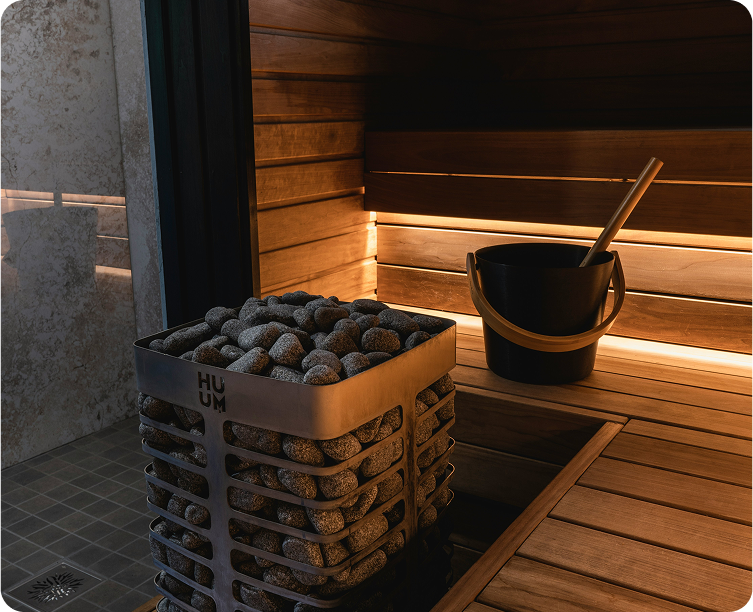
This support-focused guide covers common problems affecting Rodeo Wellness outdoor saunas, including applicable Toule or Harvia 6 kW heaters and HUUM DROP 6 kW or 9 kW upgrades with the Wi-Fi UKU controller. It helps homeowners decide what they can observe, what information support needs, when operation should stop, and which professional is best equipped to resolve the underlying cause.
Quick Troubleshooting Overview
Start with four questions: Did the sauna ever work correctly? Did the symptom appear suddenly or gradually? Does it happen in every season? Is there any sign of electrical distress, structural instability, water reaching equipment, or failed safety protection? These answers narrow the problem before anyone replaces parts or changes settings.
If there is smoke, arcing, a burning odor, melted material, repeated breaker trips, recurring overheat protection, cracked electrical enclosures, flooding, unstable benches, loose glass, or a door that could trap someone, stop using the sauna. Isolate it through the approved disconnect where safe and contact the appropriate professional. Performance troubleshooting is never more important than preserving life-safety systems.
|
Problem Area
|
Common Symptoms
|
First Appropriate Action
|
| Heating |
Slow warm-up, low plateau, weak steam, early cycling |
Log temperatures and conditions; verify sizing, stones, sensor, then electrical output |
| Electrical |
Breaker trips, partial heat, buzzing, odor, intermittent operation |
Stop use for distress signs and call a licensed electrician |
| Lighting |
Flicker, no light, heat damage, moisture in fixture |
Switch off affected circuit and verify approved lamp, load, wiring, and fixture |
| Moisture |
Condensation, damp wood, stains, leaks, musty odor |
Identify source: bathing moisture, roof, flashing, drainage, or plumbing |
| Doors and wood |
Sticking, gaps, rubbing, loose bands, checking |
Check foundation level, humidity, hardware, and model-specific adjustments |
| Controls and ventilation |
Errors, failed remote start, stale air, uneven heat |
Record codes and settings; verify sensors, door switch, network, and vent layout |
Safety Triage Before Diagnosis
A sauna combines high temperature, water, wood, glass, and substantial electrical load. That combination is safe when the product is correctly installed and maintained, but it makes improvised repairs particularly risky. Begin every investigation with the heater off and fully cooled unless a qualified technician is conducting an approved operational test.
Do not assume that pressing Off on a wall control de-energizes the entire system. External controllers, contactor boxes, lighting, ventilation, and network equipment may have separate circuits or retained power. Only a qualified person should open enclosures or verify absence of voltage.
Preserve the installation before changing it. Photograph labels, error codes, heater stones, sensor, door switch, vents, lighting fixtures, door gaps, roof conditions, and any water marks. A support team can diagnose more efficiently when it sees the original symptom rather than a system altered by repeated experiments.
Electrical Stop-Use Signs
Stop for arcing, smoke, persistent burning odor, crackling at terminals, melted insulation, repeated breaker or fuse operation, unexplained hot spots outside normal heater areas, or water inside electrical equipment. Do not repeatedly reset a protective device to keep the sauna running.
Structural Stop-Use Signs
Loose benches, failed fasteners, unstable steps, foundation settlement, severely distorted doors, cracked tempered glass, separated panels, or a compromised roof require attention before occupancy. Restrict access so another user does not assume the sauna is safe.
Combustible Clearance Problems
Towels, buckets, guards, furniture, added screens, and stored wood must not encroach on heater clearances or airflow. Remove movable obstructions only after the heater is off and cool. Construction changes need manufacturer and code review.
Escalate immediately when the problem involves:
-
Energized components: Heater terminals, contactors, controllers, junction boxes, lighting circuits, and supply conductors require qualified electrical service.
-
Protective devices: Repeated breaker, fuse, high-limit, ground-fault, or door-safety events indicate a cause that must be found.
-
Water and electricity: Leaks or condensation inside equipment require shutdown and inspection before re-energizing.
-
Load-bearing parts: Benches, steps, foundations, roof framing, and glass supports must remain stable and securely fastened.
-
Uncertain instructions: Stop if the model, voltage, regional manual, replacement part, or approved repair procedure cannot be confirmed.
Heating Problems
Heating complaints should be divided into no heat, partial heat, slow heat, early cycling, and weak steam. Each pattern suggests a different branch. A powered display with no room heat points toward settings, safety inputs, switching, supply, or heater output. A slowly rising temperature can reflect partial element operation, undersizing, glass, air leakage, stones, weather, or door use.
Harvia's troubleshooting guidance identifies breakers, heating elements, heater capacity, stones, ventilation, thermostat, and sensor position as relevant checks when a sauna heats slowly. Those categories are useful across brands, but the exact diagnostic procedure must come from the installed heater manual. Do not remove stones around energized elements as a homeowner test.
Compare performance with a consistent baseline. Record starting temperature, outdoor weather, wind, setpoint, controller reading, upper-bench reading, door openings, and time. A single cold windy session does not prove failure, while a sudden large change in similar conditions deserves prompt review.
The Sauna Does Not Heat at All
Confirm only the safe basics: the intended operating mode was selected, the timer was actually activated, the door-safety condition is satisfied, and the controller shows no error. Do not cycle the breaker repeatedly. If the controls appear normal but no heat develops, a qualified electrician should verify supply, protective devices, controller output, contactor, and heater circuits.
The Sauna Heats but Stalls Below Target
A plateau can result from only some heating elements operating, incorrect supply voltage, a heater undersized for effective volume, excessive glass, strong exhaust, door leakage, or severe weather. It can also occur when the controller sensor reaches its target before the occupied zone. Article 51 should carry the detailed low-heat diagnosis; this hub should direct support toward the correct evidence and specialist.
The Heater Cycles Off Too Early
Review sensor position, vent influence, setpoint, timer, error history, and high-limit behavior. A sensor in a hot corner or incorrectly close to the heater can stop the cycle while benches remain cool. Never move or cover a sensor to force more heat.
The Air Is Hot but Steam Is Weak
The stones may not be fully heat-soaked, may be packed too tightly, may have deteriorated, or may be unsuitable. Excess water cools stones faster than they recover. Use only approved stones, quantity, arrangement, and water practice.
Electrical and Breaker Problems
Electrical problems can be deceptive because a sauna heater often contains multiple elements and switching paths. One element bank can fail or remain unconnected while the others create visible warmth. The controller can illuminate and a contactor can click without proving that the heater receives its full rated output.
Improper element connections, wrong voltage, loose terminals, failed elements, damaged relays, contactor faults, undersized conductors, or incorrect control wiring require professional diagnosis. Loose electrical connections can generate dangerous heat and arcing; they are not simply a reason for low performance.
The electrician should use the exact model and regional wiring diagram to measure voltage under load, current contribution, element continuity with power isolated, switching operation, grounding, breaker and conductor suitability, and connection condition. Ask for written commissioning results so full output is demonstrated rather than assumed.
Breaker Trips Immediately
An immediate trip may indicate a short circuit, incorrect wiring, damaged component, or unsuitable protective arrangement. Leave it off and obtain service. Increasing the breaker rating or holding it on is dangerous.
Breaker Trips After Heating
A delayed trip can reflect heat at a loose connection, an overloaded or mismatched circuit, component breakdown as temperature rises, or an environmental issue. Record how long operation continues and whether other loads or weather conditions changed, then stop repeated testing.
Only Part of the Heater Warms
Partial warmth strongly supports checking individual element circuits and switching outputs. Visual glow can be obscured by stones and cycling, so current measurement by a licensed electrician is the reliable confirmation. Do not reach into the stone basket or remove hot stones.
208 V and 240 V Confusion
HUUM's North American DROP documentation lists different output and room-volume information at 208 V and 240 V. Verify actual supply and equipment configuration. A model selected on 240 V assumptions can behave differently on another approved supply even when connected correctly.
Give the electrician a complete electrical record:
-
Equipment identity: Exact heater, controller, contactor, serial numbers, regional version, nameplate voltage, and manual.
-
Circuit information: Breaker, conductor route, disconnect, service voltage, permit, inspection, and installer details.
-
Failure pattern: Whether the problem is day-one, sudden, intermittent, weather-related, or progressively worsening.
-
Control evidence: Error codes, screenshots, timer behavior, setpoint, door-safety state, and observed cycling.
-
Performance evidence: Time-and-temperature log, steam behavior, and confirmation of any recent cabin or electrical changes.
Lighting Problems
Sauna lighting must be suitable for the environment and installed within the lighting and control system's ratings. A lamp that fails repeatedly may be exposed to excess heat, moisture, vibration, wrong voltage, an unsuitable fixture, a poor connection, or an overloaded control output. Replacing bulbs repeatedly without finding the cause can damage equipment.
If the light is dead, flickering, discolored, wet, or producing odor, turn off the affected circuit and allow the sauna to cool. Do not remove a hot lens or work from a wet floor. Confirm the approved lamp type, wattage, fixture temperature rating, control method, and installation location with the manufacturer.
The UKU manual includes settings for controlling connected devices such as a sauna lamp or ventilation and identifies output limits for the relevant connection. That does not mean every fixture can be connected directly. The installer must confirm voltage, total load, switching method, and regional requirements for the exact UKU version.
Light Does Not Turn On
Determine whether the problem affects only the lamp or the entire controller. Check safe user settings and error displays, then obtain electrical service for the fixture, switch output, transformer or driver, junctions, and supply. A working heater does not prove the lighting circuit is healthy.
Light Flickers
Flicker can come from an incompatible LED driver, loose connection, heat-damaged lamp, moisture, voltage variation, or switching compatibility. Stop using a visibly damaged fixture and have the circuit inspected rather than trying multiple consumer bulbs.
Lens or Fixture Shows Moisture
Condensation outside a rated lens can be temporary; moisture inside the electrical enclosure needs inspection. Determine whether the source is bathing humidity, a failed seal, roof leak, or incorrect fixture before restoring power.
UKU Lamp or Vent Output Does Not Respond
Record the controller setting and whether the associated feature is enabled. If configuration is correct, qualified service should verify the output and connected load. Do not bridge terminals or substitute an unapproved device to test the function.
Control Panel Wi-Fi and Remote-Start Problems
Control problems should be separated into local operation, network connection, mobile-app access, and safety interlocks. If the wall control heats the sauna normally but the app does not, focus on Wi-Fi, account, pairing, firmware, and remote-use activation. If neither local nor remote control works, power, controller, sensor, safety input, or main-module diagnosis may be required.
The Wi-Fi UKU controller uses settings, a network connection, and safety logic to manage supported remote functions. A failed remote start may be an intentional response to the door switch or safety state rather than a defect. Never bypass the door sensor to make the app more convenient.
Record the exact display message, time, network status, door status, target, and sequence of actions. Screenshots and timestamps are more useful to support than a general report that the app is unreliable.
Controller Is Blank
A blank display can indicate loss of control power, cable or connector problems, main-module issues, or a circuit condition. Verify no obvious whole-property outage, then contact qualified service. Opening the module is not an owner check.
Controller Shows an Error
Write down the exact code before resetting. Repeated errors should be diagnosed from the model manual and support documentation. Codes involving sensors, door switches, overheating, or communications should not be cleared repeatedly without finding the cause.
Wi-Fi Will Not Connect
Confirm the network credentials, supported band and signal, router availability, and controller pairing procedure. Test signal at the actual control location. If local heating works, network troubleshooting can usually proceed without modifying heater wiring.
Remote Start Is Blocked
Confirm that remote use has been armed correctly and that the door-safety sequence is satisfied. Opening the door may intentionally require reactivation. The safe remedy is following the supplied procedure, not defeating the switch.
A useful control-support package includes:
-
Controller details: Model, firmware where available, serial number, app version, and installation date.
-
Network details: Router distance, frequency band, signal behavior, recent password or hardware changes, and outage history.
-
Exact sequence: The buttons, app commands, door openings, notifications, and timestamps leading to the failure.
-
Displayed evidence: Photographs or screenshots of error codes, connection state, target temperature, and sensor reading.
-
Local comparison: Whether wall-panel operation, lighting, ventilation output, and heating still function without the app.
Ventilation and Air-Quality Problems
Ventilation affects breathing comfort, heat distribution, sensor accuracy, heater airflow, and post-session drying. A stale or heavy room may have blocked, undersized, closed, or incorrectly positioned vents. A sauna that struggles to heat can also have excessive mechanical exhaust or an airflow path that removes hot air too quickly.
Harvia's current guidance distinguishes mechanical and gravity ventilation and emphasizes keeping supply airflow away from a separate temperature sensor. It also describes a low exhaust location for certain gravity-ventilated electric saunas. Apply only the arrangement approved for the actual cabin and heater; generic vent rules can conflict with a specific system.
Do not solve ventilation complaints by sealing every opening. The room needs controlled air exchange, and the building needs to dry. Instead, inspect for blockages, unapproved fans, closed dampers, screens, snow, insects, or later modifications that changed the designed path.
Stale Air or Headache
End the session, ventilate, and verify that supply and exhaust paths are open and unobstructed. Symptoms can have multiple causes, and users should leave immediately for dizziness, nausea, weakness, confusion, chest discomfort, or other concerning signs.
Cold Draft at the Bench
A vent, door gap, or fan may direct air across bathers. Redirect only through approved components and layout. Blocking the vent may create worse air quality and alter sensor behavior.
Hot Ceiling and Cold Feet
Temperature stratification is normal, but extreme discomfort can reflect low benches, inadequate mixing, or poor vent placement. Review bench and foot-platform height alongside ventilation before raising the thermostat.
Sauna Will Not Dry
Check the post-session drying routine, exhaust path, pooled water, floor drain, wet accessories, and exterior weather. Cold outdoor air alone may not dry the room effectively. Follow the heater and cabin instructions for residual heat and ventilation.
Moisture Condensation and Leak Problems
Moisture inside a sauna is expected; persistent wetness, concealed saturation, standing water, and rain entry are not. Distinguish bathing condensation from an envelope leak. Condensation generally follows sessions and appears on cold surfaces, while roof or flashing leaks correlate with weather and can leave localized stains even when the sauna was not used.
After each session, remove standing water, empty buckets, lift removable floor pieces where instructed, and use the approved drying routine. Harvia recommends using heater heat and sufficient ventilation for drying, while warning that cold outside air does not necessarily promote drying. The cabin manual should determine door and vent positions.
Musty odor, darkening, persistent soft wood, peeling finish, corrosion, or moisture inside lighting and controls requires investigation. Cleaning alone will not correct a roof, drainage, vapor-control, or ventilation failure.
Condensation on Glass
Temporary condensation on cold panoramic glass can be normal, especially early in a winter session. Persistent water should drain or be wiped safely so it does not soak frames, sills, floors, or electrical components. Check whether the room dries fully afterward.
Roof or Flashing Leak
Map the stain relative to roof seams, penetrations, flashing, gutters, and wind direction. Photograph it before drying. Roof repair should use compatible materials and preserve ventilation and manufacturer warranty details.
Water Beneath the Sauna
Check roof runoff, grade, downspouts, floor drainage, snowmelt, and foundation. A wet base can transfer moisture into the cabin and encourage settlement or frost movement. Correct the site drainage rather than sealing water inside the structure.
Musty Odor
Remove wet textiles and accessories, inspect concealed or shaded areas that are safely accessible, clean with sauna-approved products, and improve the approved drying routine. Persistent odor may require professional moisture assessment and selective opening of assemblies.
Trace moisture by documenting:
-
Timing: Whether wetness follows bathing, rain, snowmelt, wind, cleaning, or periods of non-use.
-
Location: Ceiling, wall joint, window, door, floor, heater area, lighting fixture, foundation, or exterior cladding.
-
Water path: Roof slopes, penetrations, gutters, drip edges, grade, drains, and likely capillary routes.
-
Drying behavior: How long surfaces remain wet and whether approved heat and ventilation restore them fully.
-
Material change: Staining, softness, checking, corrosion, finish failure, odor, or fastener movement over time.
Door Alignment and Closure Problems
Outdoor sauna doors experience interior heat, exterior weather, repeated use, and movement in the surrounding wood frame. A sticking door can result from temporary swelling, loose hinges, foundation settlement, an out-of-square cabin, ice, debris, roller-latch adjustment, or actual warping. Diagnose what moved before sanding or planing.
A level and stable foundation supports reliable door operation. Current outdoor-sauna installation guidance commonly instructs owners to verify the base, adjust hinges and locks, and inspect hardware periodically. If the entire opening has changed shape, trimming the door may hide a foundation or structural problem.
The door must open freely from inside and should never be fitted with a lock that can trap occupants. Glass doors require careful hinge and latch adjustment; cracked, chipped, or loose tempered glass should be taken out of service and assessed professionally.
Door Sticks After Rain
Moisture-related swelling may be temporary. Check drainage, roof protection, exterior finish, frame moisture, and hinges. Allow conditions to normalize before removing material, unless the door cannot provide safe egress.
Door Has a Large Gap in Dry Weather
Seasonal shrinkage, loose hardware, band tension on certain barrel designs, or frame movement may be responsible. Use the model-specific adjustment procedure. Do not over-tighten structural bands or fasteners without the manufacturer's sequence.
Glass Door Will Not Latch
Inspect foundation level, hinge bolts, roller latch, frame alignment, and obstructions. Glass cannot be planed to fit. Use approved hardware adjustment and support the door correctly during service.
Door Opens During Heating
A weak latch, misalignment, pressure, or warped frame can allow hot air to escape and interfere with remote-safety logic. Stop remote operation until reliable closure and door-sensor behavior are confirmed.
Wood Movement Cracks and Barrel-Sauna Gaps
Wood absorbs and releases moisture as seasons change, so some swelling, shrinkage, surface checking, and small gap variation are normal. Thermally modified wood is more dimensionally stable than untreated material, but it still moves. The objective is not to eliminate movement; it is to distinguish expected change from water damage, structural separation, failed fastening, or incorrect foundation support.
Barrel saunas depend on coordinated stave fit, end walls, and tension bands. Dry weather can loosen the shell, while humid conditions can tighten it. Band adjustments must follow the manufacturer's method and timing. Over-tightening can damage staves or distort end walls, while ignoring a persistently loose shell can allow leakage.
Cabin saunas can show movement at siding, trim, doors, and panel joints. Do not fill every seasonal gap with rigid sealant or drive additional screws indiscriminately. The assembly may need room to move, and extra fasteners can split boards or puncture concealed layers.
Normal Surface Checking
Fine cracks that follow grain and remain superficial are often cosmetic. Track width, depth, location, and seasonal change. Splinters on benches, loose boards, or cracks affecting fasteners require maintenance.
Persistent Open Gaps
Gaps that admit rain, daylight, pests, or continuous drafts after seasonal conditions normalize should be assessed. Confirm foundation level, band tension, moisture condition, assembly, and whether components were installed in the correct sequence.
Bulging or Buckled Interior Boards
Buckling can reflect insufficient expansion allowance, moisture imbalance, failed fastening, or an assembly problem. Avoid forcing boards flat while hot or wet. A qualified installer should inspect the wall system and concealed moisture risk.
Exterior Finish Failure
Peeling, cracking, or uneven weathering may indicate incompatible coating, trapped moisture, inadequate preparation, or overdue maintenance. Use only products approved for the wood species and sauna exterior; interior benches and walls have different requirements.
Evaluate wood movement with these checks:
-
Seasonal pattern: Note whether gaps close in humid weather and reopen in dry conditions or remain progressively worse.
-
Foundation condition: Confirm support points remain level, stable, drained, and free of frost or erosion movement.
-
Water exposure: Identify roof, splashback, snow, soil, vegetation, and drainage sources that keep wood wet.
-
Fasteners and bands: Follow the exact model procedure, torque guidance, and sequence rather than tightening by intuition.
-
Structural impact: Escalate movement affecting doors, benches, glass, roof, heater clearances, wiring, or weather protection.
Unusual Odors Sounds and Surface Changes
A new heater and new wood can produce temporary odors during initial curing, but persistent electrical, chemical, musty, or smoky smells require investigation. Identify whether the odor begins with heater operation, lighting, moisture, cleaning products, or exterior weather. Ventilate and stop use for any odor associated with smoke, arcing, melting, or symptoms.
Clicks from controls and thermal expansion can be normal, while loud buzzing, crackling, grinding fans, or repeated relay chatter may indicate a problem. Record a short audio or video from a safe distance for support. Do not remove covers to locate the source while energized.
Darkening directly above a heater can result from hot rising air carrying dust, but rapid charring, blistering finish, or clearance-related damage is not normal. Confirm heater clearances, stone arrangement, guards, sensor, ventilation, and wall condition.
Burning or Electrical Odor
Shut down immediately and obtain qualified inspection. Do not assume the smell is normal curing if it returns, intensifies, accompanies flicker or trips, or appears after months of use.
Musty or Sour Odor
Inspect drying, textiles, floor grids, drains, hidden corners, and water entry. Use sauna-safe cleaning products and address the moisture source. Strong fragrances can mask rather than solve the problem.
Heater Noise
Metal expansion and contactor clicks may be expected. Sustained buzzing, arcing sounds, or new vibration should be documented and reviewed. Stones touching elements incorrectly can also create stress and performance issues.
A Support-Ready Diagnostic Process
Good troubleshooting reduces the number of variables before parts are ordered. Use one written record for the cabin, heater, controls, electrical system, foundation, and maintenance. Owners often contact the heater manufacturer for a foundation problem or the cabin builder for a supply-voltage issue because the symptom appears in the sauna. Evidence helps route the case correctly.
Begin with the product identity and installation date. Add photographs of labels and the full cabin, then document the symptom under repeatable conditions. Note every change made before the problem, including router replacement, electrical service work, new stones, vent adjustment, door hardware, exterior finish, severe weather, and foundation work.
After service, record what was tested, measured, adjusted, or replaced. A written history prevents repeated diagnosis and makes warranty conversations more efficient. It also establishes a baseline for future seasonal changes.
Contact the Electrician
Use the electrician for breakers, supply voltage, current, elements, contactors, wiring, grounding, lighting circuits, disconnects, and water exposure to electrical components. Provide the exact wiring diagram and controller information.
Contact the Sauna Installer or Builder
Use the installer for assembly, doors, glass, benches, foundation interface, panel fit, roof details, insulation, vapor control, heater clearances, sensors, and vent placement. Installation and electrical responsibilities may overlap, so share one evidence package.
Contact Manufacturer Support
Use manufacturer support for error codes, approved parts, warranty, stone specifications, sensor diagrams, firmware, model-specific adjustments, and regional manuals. Do not rely on visually similar online products.
Contact a Moisture or Structural Professional
Persistent leaks, soft wood, mold-like growth, foundation movement, roof failure, or structural distortion may require building-envelope, carpentry, roofing, or engineering expertise beyond ordinary product support.
Build every support request around five facts:
-
Identity: Cabin model, heater, controller, serial numbers, regional voltage, installation date, and seller.
-
History: Whether the issue is new, day-one, sudden, gradual, seasonal, intermittent, or linked to a specific event.
-
Evidence: Clear photographs, error screenshots, temperature logs, weather, audio, and safe visual observations.
-
Changes: Electrical work, app updates, router changes, stones, vents, finishes, foundation movement, leaks, and repairs.
-
Safety status: Whether the sauna is shut down, which protective device operated, and whether water or damage is present.
Frequently Asked Questions
What Should Outdoor Sauna Troubleshooting Start With
Start with safety, then classify the problem as day-one, sudden, gradual, seasonal, or intermittent. Record the exact cabin and equipment, symptoms, weather, error codes, and recent changes before adjusting anything.
Why Is My Outdoor Sauna Not Heating
Possible causes include settings, door-safety inputs, loss of supply, control or contactor problems, incorrect element connections, failed elements, wrong voltage, sensor faults, or a tripped protective device. Electrical diagnosis requires a qualified professional.
Why Does My Sauna Heat Slowly
Check effective room size, glass, outdoor temperature, door leakage, stones, ventilation, sensor placement, heater output, and actual supply voltage. A partial element bank can make the heater look active while delivering reduced power.
Why Does My Sauna Breaker Keep Tripping
A trip may indicate wiring or component faults, overload, heat-damaged connections, moisture, or an unsuitable installation. Leave the circuit off and have a licensed electrician diagnose it; do not install a larger breaker casually.
Why Is My Sauna Light Flickering
Possible causes include an incompatible lamp or driver, loose connection, excessive heat, moisture, voltage variation, or control-output compatibility. Switch off the affected circuit and arrange inspection.
Can I Connect Sauna Lighting to UKU
Only when the exact UKU version, output rating, lamp voltage, load, switching method, and local requirements allow it. A qualified installer should design and connect the circuit.
Why Will My Wi-Fi Sauna Not Start Remotely
Remote use may not be armed, the door-safety sequence may be open, the network may be unavailable, or the controller may show an error. Follow the exact UKU procedure and never bypass the door switch.
Why Is There Condensation on Sauna Glass
Cold glass can condense bathing humidity, especially in winter. Wipe or drain water safely and ensure the cabin dries. Persistent moisture away from sessions may indicate leakage or ventilation problems.
Why Does My Outdoor Sauna Smell Musty
The cabin may not be drying, wet items may remain inside, drainage may be poor, or water may be entering through the roof, walls, door, or foundation. Correct the moisture source before relying on cleaning.
Why Is My Sauna Door Sticking
Seasonal swelling, loose hinges, frame movement, ice, debris, foundation settlement, or warping may be responsible. Diagnose the frame and base before sanding the door.
Are Gaps Between Sauna Boards Normal
Small seasonal changes can be normal because wood expands and contracts. Persistent weather leaks, large drafts, loose components, or gaps affecting structure and heater clearances need installer review.
Should I Tighten Barrel Sauna Bands
Only according to the model-specific procedure and seasonal guidance. Over-tightening can damage staves or distort the sauna, while under-tightening can permit gaps and leaks.
Why Are My Feet Cold in the Sauna
Hot air stratifies near the ceiling. Low benches, poor foot-platform height, or ventilation layout can leave feet cool even when the sensor reads hot. Review geometry and airflow rather than only increasing temperature.
Why Are My Sauna Stones Not Producing Steam
They may not be heat-soaked, may be packed too tightly, deteriorated, incorrect, or cooled by excessive water. Follow the heater's approved stone and water instructions.
Can I Move the Temperature Sensor
Only when the exact manufacturer instructions and qualified installer authorize the new location. Moving or covering a sensor can defeat control and overheat protection.
How Do I Fix a Sauna Error Code
Record the exact code and consult the controller's official manual or support. Repeatedly clearing sensor, high-limit, door, or communication errors without finding the cause is not a repair.
Can Rain Get Inside an Outdoor Sauna
Wind-driven water can enter through failed roofing, flashing, joints, doors, or drainage details. Trace when and where it appears, document the path, and repair the envelope rather than sealing intended vents.
Is Wood Cracking Inside a Sauna Normal
Fine surface checking can be normal. Cracks that create splinters, loosen fasteners, affect benches, admit water, or grow substantially should be assessed and repaired appropriately.
When Should I Stop Using the Sauna
Stop for smoke, arcing, burning odor, repeated trips, electrical water exposure, unstable benches or steps, loose or cracked glass, failed door egress, severe leaks, or compromised heater clearances.
Who Should Repair an Outdoor Sauna
Use a licensed electrician for electrical systems, the installer for assembly and enclosure issues, manufacturer support for product-specific faults, and moisture, roofing, carpentry, or structural specialists when the building itself is affected.
Editorial Review and Primary Sources
This article was reviewed against current manufacturer and outdoor-sauna guidance on October 14, 2026. Electrical, control, ventilation, structural, and maintenance requirements vary by model, market, and installation. Use the exact supplied manuals, preserve safety systems, and obtain qualified service where indicated.
Harvia sauna troubleshooting resources
Harvia sauna ventilation guidance
HUUM UKU Wi-Fi and Local control manual
Thermory sauna-door maintenance guidance
Outdoor-sauna installation and maintenance reference
Internal Linking Note
Use this page as the central support hub. Link to the dedicated low-heat guide, heat-up-time guide, temperature guide, electrical requirements, Wi-Fi heater guide, ventilation, outdoor maintenance, foundations, panoramic glass, wood comparisons, and heater comparisons. Each specialist page should link back here for broader diagnosis.
Final Thoughts
The best outdoor sauna troubleshooting process protects the evidence and separates symptoms by system. Heating, controls, lighting, ventilation, moisture, doors, and wood movement interact, so replacing the most visible component rarely works without confirming the cause. The timeline of the problem is often the strongest clue.
Owners can contribute safe observations: model labels, error codes, weather, temperature logs, door fit, visible moisture, stone condition, vent blockage, and seasonal wood change. Licensed professionals should handle energized circuits, heater elements, terminal connections, controller outputs, lighting wiring, and any equipment exposed to water.
A well-documented case usually reaches the correct repair faster. Keep manuals, commissioning readings, permits, photographs, maintenance dates, app screenshots, and service reports together so the installer, electrician, manufacturer, and homeowner work from the same facts.
Our Recommendation
For any Rodeo Wellness sauna problem, begin with a stop-use safety screen and a written symptom record. Identify the Toule or Harvia 6 kW heater, HUUM DROP 6 kW, or HUUM DROP 9 kW system and its controller before following advice. Never mix wiring, sensor, stone, or clearance instructions between brands or regional models.
If the issue involves heat, have a licensed electrician confirm actual voltage and element contribution before replacing the heater or increasing capacity. If it involves Wi-Fi UKU, preserve app and controller evidence and verify the approved door-safety sequence. If it involves moisture, doors, or wood movement, inspect the foundation, drainage, roof, drying routine, and assembly as one enclosure system.
The preferred solution is always the documented correction of the root cause—not a bypass, larger breaker, relocated sensor, sealed vent, removed stones, or improvised coating. That approach protects performance, warranty, safety, and the long-term value of the sauna.



 OUR BEST SELLERS