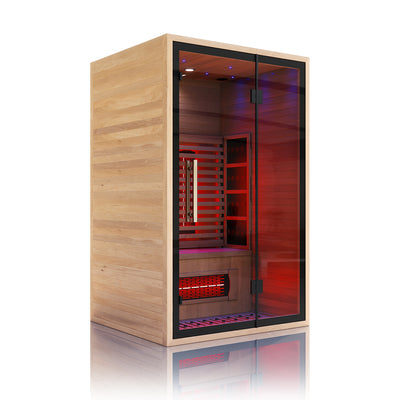
Planning the electrical installation is one of the most important steps when purchasing an outdoor sauna. While buyers often spend weeks comparing sauna sizes, wood species, heater options, and design styles, many don't begin thinking about electrical requirements until after placing their order. Understanding outdoor sauna electrical requirements before purchasing helps avoid installation delays, unexpected costs, and last-minute changes that can postpone enjoying your new sauna.
Unlike many outdoor appliances, premium outdoor saunas require dedicated electrical planning because sauna heaters consume significantly more power than standard household devices. The heater is responsible for producing the high temperatures necessary for an authentic sauna experience, making proper electrical service essential for both performance and safety. Choosing the correct electrical configuration ensures the heater operates efficiently while complying with local building and electrical regulations.
The good news is that most residential electrical installations are straightforward when planned properly. Many modern homes already have sufficient electrical capacity to support an outdoor sauna, although a dedicated circuit, appropriate breaker, and professional installation are almost always required. Understanding these requirements early allows homeowners to coordinate with a licensed electrician before delivery, helping create a smoother installation process.
Electrical requirements vary depending on several factors, including heater size, operating voltage, sauna capacity, local electrical codes, and the overall design of the home. Smaller personal saunas may require relatively modest electrical service, while larger family-sized outdoor saunas equipped with higher-output heaters naturally demand more robust electrical infrastructure. Knowing these differences before making a purchase allows homeowners to choose the most appropriate sauna for their property.
This guide explains outdoor sauna electrical requirements in detail, covering voltage, breaker sizing, dedicated circuits, heater power, wire sizing considerations, GFCI protection, disconnects, panel capacity, common installation mistakes, and the questions every homeowner should ask before scheduling installation.
Outdoor Sauna Electrical Requirements At A Glance
Although electrical requirements vary depending on the heater and sauna size, most premium outdoor saunas follow similar installation principles. The majority of residential outdoor saunas sold in North America operate on 240-volt dedicated electrical circuits and require installation by a qualified electrician. Larger heaters require higher amperage, but the overall planning process remains remarkably similar across most premium models.
Many homeowners are surprised to learn that the sauna structure itself consumes very little electricity. Nearly all electrical demand comes from the heater, making heater selection the primary factor influencing breaker size, wire sizing, and overall electrical planning. Features such as interior lighting, Bluetooth speakers, or Wi-Fi controls generally consume only a small fraction of the total electrical load.
Understanding these basic requirements before ordering a sauna helps homeowners communicate more effectively with electricians while reducing the likelihood of unexpected installation costs.
Quick Electrical Requirements Comparison
| Component |
Typical Requirement |
| Operating Voltage |
240V (most outdoor saunas) |
| Circuit Type |
Dedicated Circuit |
| Breaker Size |
Depends on heater output |
| Professional Installation |
Recommended |
| Electrical Permit |
May be required locally |
| Disconnect Switch |
Often required by local code |
| Heater Power |
Typically 3kW–10.5kW |
| GFCI Protection |
Varies by local code and installation |
Why Electrical Planning Matters Before Buying A Sauna
Electrical planning is often overlooked during the early stages of shopping for an outdoor sauna, yet it has a direct impact on installation timelines, project costs, and long-term performance. Buyers who verify their electrical capacity before placing an order typically experience smoother installations because potential issues can be addressed well in advance of delivery.
Waiting until the sauna arrives to begin electrical planning often creates unnecessary delays. Electricians may need additional time to inspect the home's electrical panel, determine available capacity, obtain permits where required, or install new wiring between the main panel and the sauna location. Completing these steps early allows installation to proceed much more efficiently.
Proper planning also helps homeowners select the most appropriate heater. While larger heaters generally provide faster heat-up times for larger cabins, they also require greater electrical capacity. Understanding these trade-offs before purchasing allows buyers to balance performance, budget, and available electrical infrastructure.
Several Benefits Come From Early Electrical Planning
-
Avoid Installation Delays: Preparing electrical service before delivery keeps the project on schedule.
-
Confirm Panel Capacity: An electrician can determine whether the existing electrical service is sufficient.
-
Budget More Accurately: Electrical upgrades can be included in the overall project cost.
-
Choose The Right Heater: Electrical capacity may influence heater selection.
-
Improve Safety: Proper planning helps ensure the installation complies with applicable electrical codes.
Electrical planning should be viewed as part of the overall sauna project rather than an afterthought. Coordinating with a licensed electrician early often saves both time and money while reducing stress during installation.
Understanding Outdoor Sauna Power Requirements
The primary purpose of the electrical system is to supply adequate power to the sauna heater. Unlike lighting or entertainment systems, sauna heaters operate at high power levels because they must raise and maintain temperatures well above those found in typical residential spaces. As heater size increases, electrical demand increases proportionally.
Heater output is generally measured in kilowatts (kW). Smaller personal saunas may use heaters around 3kW, while larger family-sized outdoor saunas commonly use 6kW, 8kW, or 9kW heaters. Luxury commercial or extra-large residential installations may use even larger heaters depending on cabin volume and design.
Choosing The Correct Heater Involves Balancing Several Considerations
-
Sauna Size: Larger cabins require more heating capacity.
-
Climate: Colder outdoor environments may benefit from higher-output heaters.
-
Desired Heat-Up Time: Larger heaters generally reach operating temperature more quickly.
-
Electrical Capacity: Available electrical service influences heater selection.
-
Manufacturer Recommendations: Always match the heater to the sauna specifications.
The heater represents the overwhelming majority of the sauna's electrical load. Lighting, Wi-Fi controllers, and audio systems typically contribute only a small percentage of total power consumption. For this reason, heater selection should always be considered first when planning electrical service.
Do Outdoor Saunas Need 120V Or 240V?
One of the first questions homeowners ask when researching outdoor sauna electrical requirements is whether an outdoor sauna operates on a standard 120-volt household outlet or requires a dedicated 240-volt circuit. The answer depends on the size of the sauna and, more importantly, the heater installed. While a few compact indoor personal saunas may operate on 120V power, the vast majority of premium outdoor saunas are designed to operate on 240V electrical service.
The reason is simple. Traditional sauna heaters require significantly more power than standard household appliances. Heating a fully insulated outdoor cabin to temperatures approaching 180–200°F demands considerably more electrical output than a standard receptacle can safely provide. A 240V supply allows the heater to deliver this higher power efficiently while maintaining consistent performance throughout the sauna session.
Homeowners planning to install a premium outdoor sauna should generally expect that a licensed electrician will install a new 240V dedicated circuit specifically for the heater. This approach not only improves performance but also aligns with common residential installation practices across North America.
Several Factors Determine Whether A Sauna Requires 120V Or 240V
-
Heater Size: Larger heaters almost always require 240V electrical service.
-
Sauna Capacity: Family-sized outdoor saunas typically operate on 240V.
-
Desired Performance: Higher voltage supports faster heat-up times and consistent temperatures.
-
Manufacturer Specifications: Always follow the electrical requirements listed for the specific sauna model.
-
Regional Electrical Standards: Requirements may vary depending on country and local electrical codes.
For most premium outdoor saunas, homeowners should plan for 240V electrical service from the beginning of the project. Verifying this requirement before delivery helps eliminate installation delays and ensures the electrical system is prepared when the sauna arrives.
Breaker Size Requirements
Breaker size is another essential component of outdoor sauna electrical requirements because it protects both the electrical circuit and the sauna equipment. The correct breaker is determined by the heater's electrical specifications rather than by the size of the sauna structure itself. Installing the proper breaker helps ensure reliable operation while protecting the electrical system from overload conditions.
As heater output increases, electrical current also increases. Larger heaters naturally require higher-capacity breakers than smaller models. Although many homeowners want a single breaker size recommendation, there is no universal answer because every heater is designed around specific electrical characteristics provided by the manufacturer.
In residential outdoor sauna installations, breaker sizes commonly fall within predictable ranges based on heater output. However, final breaker selection should always be confirmed using the heater specifications and applicable electrical codes before installation begins.
Typical Residential Breaker Examples
| Heater Size |
Typical Breaker Range* |
| 3kW |
Approximately 20A |
| 4.5kW |
Approximately 30A |
| 6kW |
Approximately 30A–40A |
| 8kW |
Approximately 40A |
| 9kW |
Approximately 45A–50A |
| 10.5kW |
Approximately 50A–60A |
*Actual breaker sizing depends on the manufacturer's specifications, conductor sizing, and applicable local electrical codes.
Several Factors Influence Breaker Selection
-
Heater Power Rating: Larger heaters require higher-capacity circuits.
-
Voltage: Most premium outdoor heaters operate on 240V.
-
Continuous Electrical Load: Sauna heaters operate for extended periods during normal use.
-
Manufacturer Requirements: Heater documentation should always be followed.
-
Local Code Compliance: Final breaker sizing should be approved by the installing electrician.
Rather than selecting a breaker based solely on heater size, homeowners should allow their electrician to verify the manufacturer's electrical requirements before installation.
Dedicated Circuit Requirements
Nearly every premium outdoor sauna heater requires its own dedicated electrical circuit. This means the sauna operates independently from other household appliances rather than sharing electrical capacity with lighting, outlets, or other equipment. Dedicated circuits improve both safety and performance while reducing the likelihood of nuisance breaker trips.
Because sauna heaters draw substantial electrical power during operation, sharing the circuit with additional appliances could overload the wiring or cause voltage fluctuations that affect heater performance. A dedicated circuit ensures the heater receives stable power whenever the sauna is in use.
Dedicated circuits also simplify future servicing because electricians can easily isolate the sauna from the remainder of the home's electrical system when maintenance is required.
Benefits Of A Dedicated Sauna Circuit Include
-
Reliable Heater Performance: Stable electrical supply helps maintain consistent temperatures.
-
Improved Electrical Safety: Reduces the risk of overloading shared household circuits.
-
Simplified Maintenance: Electricians can isolate the sauna circuit more easily.
-
Compliance With Manufacturer Requirements: Many sauna manufacturers specify dedicated circuits.
-
Long-Term Reliability: Dedicated wiring reduces unnecessary electrical stress.
For most residential outdoor sauna installations, homeowners should expect the electrician to install an entirely separate circuit from the main electrical panel directly to the sauna equipment.
Wire Size & Electrical Cable
Homeowners frequently ask what wire size is required when planning outdoor sauna electrical requirements. While this is an important consideration, wire sizing should never be determined by guesswork or generalized online advice. The appropriate conductor size depends on several technical factors, including heater output, breaker size, conductor material, installation method, cable length, ambient temperature, and local electrical code requirements.
Longer cable runs may require larger conductors to compensate for voltage drop, while different installation environments can affect conductor ampacity. Because these variables vary from one property to another, wire sizing should always be calculated by the electrician responsible for the installation.
Rather than focusing on a specific wire gauge, homeowners should understand the broader planning considerations.
Wire Sizing Depends On Factors Such As
-
Heater Output: Higher-power heaters require conductors capable of carrying greater current.
-
Breaker Rating: Conductors must be properly matched to circuit protection.
-
Cable Length: Longer distances may influence conductor sizing.
-
Installation Environment: Indoor and outdoor installations may require different cable types.
-
Local Electrical Codes: Final conductor selection must comply with local regulations.
In addition to conductor size, electricians will also determine the appropriate wiring method, conduit requirements where applicable, and weather-resistant materials suitable for outdoor installation.
For homeowners, the most important takeaway is simple: allow the heater specifications and licensed electrician to determine the correct wiring design. Proper conductor selection is critical to safe, reliable, and code-compliant sauna operation, making it one of the most important aspects of the entire installation process.
Heater Size Vs Electrical Requirements
The heater is the single most important factor influencing outdoor sauna electrical requirements. Regardless of the sauna's size or exterior design, the electrical system must be capable of supporting the heater specified by the manufacturer. Larger heaters generate more heat, allowing larger cabins to reach operating temperature more quickly, but they also require greater electrical capacity.
Choosing the correct heater is not simply about selecting the highest available output. Manufacturers size heaters according to the sauna's interior volume, insulation, and intended performance. An oversized heater may consume more electricity than necessary, while an undersized heater may struggle to maintain proper temperatures, particularly during colder weather.
Understanding the relationship between heater size and electrical demand allows homeowners to discuss installation requirements with their electrician before the sauna arrives.
Several Factors Influence Heater Selection
-
Sauna Volume: Larger cabins require higher-output heaters.
-
Outdoor Climate: Colder regions may benefit from additional heating capacity.
-
Desired Heat-Up Time: Larger heaters generally reach operating temperature faster.
-
Electrical Capacity: Existing electrical service may influence available heater options.
-
Manufacturer Specifications: Always use the heater recommended for the sauna model.
Below are typical residential heater categories used in premium outdoor saunas.
3kW Heaters
Smaller 3kW heaters are generally found in compact personal saunas designed for one or two users. Because they heat a relatively small interior volume, their electrical requirements are modest compared to larger family-sized installations.
Typical Characteristics Include
-
Compact Sauna Applications: Ideal for smaller personal wellness spaces.
-
Smaller Electrical Demand: Requires less electrical capacity than larger heaters.
-
Shorter Wiring Distances: Common in many residential installations.
-
Personal Wellness Spaces: Frequently used in compact outdoor sauna designs.
-
Lower Operating Costs: Consumes less electricity during operation.
6kW Heaters
The 6kW heater is one of the most common choices for premium residential outdoor saunas. It provides an excellent balance between heating performance and electrical efficiency, making it suitable for many two- to four-person models.
Typical Characteristics Include
-
Popular Residential Heater Size: One of the most commonly installed options.
-
Medium-Sized Outdoor Saunas: Well suited for many family-sized cabins.
-
Consistent Heat Performance: Delivers reliable operating temperatures.
-
Dedicated 240V Circuit: Commonly installed on its own circuit.
-
Balanced Efficiency: Excellent combination of performance and energy use.
8kW Heaters
An 8kW heater is typically selected for larger cabins where additional heating capacity improves heat-up times and temperature consistency.
Typical Characteristics Include
-
Larger Interior Volumes: Designed for more spacious sauna cabins.
-
Faster Heat-Up Performance: Reaches operating temperature more quickly.
-
Greater Electrical Demand: Requires more capacity than 6kW models.
-
Family Sauna Applications: Frequently installed in larger residential models.
-
Careful Electrical Planning: Proper circuit design is essential.
9kW Heaters
Premium outdoor saunas designed for four to six occupants frequently use 9kW heaters. These heaters produce the higher temperatures many enthusiasts associate with authentic traditional sauna experiences while providing quicker recovery between repeated sessions.
Typical Characteristics Include
-
Excellent Performance: Ideal for larger outdoor sauna cabins.
-
Cold-Weather Heating: Provides faster heat-up during cooler conditions.
-
Luxury Residential Use: Commonly selected for premium installations.
-
Higher Electrical Capacity: Requires larger dedicated circuits.
-
Smart Controls: Frequently paired with Wi-Fi-enabled controller systems.
10.5kW Heaters
Large residential wellness retreats and certain commercial installations may utilize 10.5kW heaters where maximum heating capacity is required.
Typical Characteristics Include
-
Large Sauna Applications: Designed for expansive wellness spaces.
-
High Heating Capacity: Delivers maximum heat output.
-
Greater Electrical Planning: Requires careful system design.
-
Luxury Projects: Frequently specified for premium installations.
-
Higher-Capacity Electrical Service: Typically requires larger residential service capacity.
Regardless of heater size, homeowners should never assume electrical requirements based solely on the kilowatt rating. The manufacturer's installation documentation and a licensed electrician should always determine the final electrical design.
GFCI Requirements
Questions about GFCI protection frequently arise when discussing outdoor sauna electrical requirements. Because outdoor installations involve electricity, weather exposure, and moisture, homeowners naturally want to know whether a Ground Fault Circuit Interrupter (GFCI) is required for their sauna.
The answer depends on several factors, including the heater manufacturer, the installation method, the applicable edition of the National Electrical Code (NEC) where relevant, and local building regulations. Requirements can vary between jurisdictions, and local authorities may adopt different code versions or additional amendments.
For this reason, homeowners should avoid relying on generalized online advice regarding GFCI requirements.
Instead, The Installation Should Always Be Based On
-
The Heater Manufacturer's Installation Instructions: Always follow the electrical requirements provided by the manufacturer.
-
Applicable Local Electrical Codes: Local regulations determine the final installation requirements.
-
The Licensed Electrician's Evaluation: A qualified electrician can verify the correct installation method.
-
Inspection Requirements: Local inspections may establish additional project requirements.
-
Permit Conditions: Any requirements established during the permitting process should be followed.
Because electrical codes continue evolving over time, the safest approach is to verify current requirements before installation begins rather than assuming previous installations follow today's standards.
Disconnect Switch Requirements
Many outdoor sauna installations also require a local disconnecting means. A disconnect switch allows electrical power to be safely isolated before servicing or maintenance is performed on the sauna equipment.
Whether a disconnect is required depends on the installation, equipment design, and local electrical code. Some heaters incorporate disconnecting provisions within their installation requirements, while other projects require a separate disconnect installed nearby.
Several Reasons Disconnects Are Commonly Used Include
-
Electrical Safety: Allows power to be isolated before servicing.
-
Maintenance Convenience: Simplifies future repairs and inspections.
-
Code Compliance: Local regulations may require a visible disconnect.
-
Emergency Access: Provides a safe method of disconnecting equipment if needed.
-
Professional Installation: Most electricians evaluate disconnect requirements during project planning.
Because disconnect requirements vary, homeowners should discuss this topic with their electrician during the initial site inspection rather than after wiring has already begun.
Indoor Electrical Panel Vs Outdoor Sauna Location
The distance between the home's electrical panel and the outdoor sauna also influences project planning. While homeowners often focus on the heater itself, cable routing can become one of the more significant parts of the installation depending on the property's layout.
Saunas located close to the electrical panel generally require shorter cable runs, which may simplify installation. Saunas positioned farther into the backyard may require longer conduit runs, trenching, or additional planning to protect wiring from weather and physical damage.
Several Site Conditions Influence Installation Complexity
-
Distance From The Main Panel: Longer runs may increase installation labor.
-
Landscape Features: Patios, driveways, retaining walls, and gardens may affect cable routing.
-
Foundation Type: Slabs, decks, or gravel pads influence conduit planning.
-
Future Outdoor Projects: Planning ahead allows electrical infrastructure to support additions such as outdoor lighting or cold plunges.
-
Property Accessibility: Easier access can simplify both installation and future maintenance.
Although every property is different, discussing the proposed sauna location with an electrician before purchasing helps identify any installation challenges early in the planning process.
Can Your Existing Electrical Panel Support An Outdoor Sauna?
One of the most common concerns homeowners have before purchasing a sauna is whether their existing electrical panel has enough capacity to support another high-powered appliance. The answer depends on the home's overall electrical service, current electrical load, available breaker spaces, and the size of the sauna heater being installed.
Many modern homes already have sufficient capacity for a residential outdoor sauna, particularly if they have 200-amp electrical service. However, every home is different. Larger HVAC systems, electric vehicle chargers, pools, hot tubs, electric ranges, and other high-demand appliances all contribute to the home's total electrical load. Before adding a sauna, a licensed electrician should evaluate whether the existing service can safely accommodate the additional demand.
In some cases, no electrical upgrades are required beyond installing a new dedicated circuit. In others, homeowners may need a subpanel, additional breaker space, or even a service upgrade depending on the age of the home and existing electrical infrastructure.
Several Factors Influence Panel Capacity
-
Main Service Size: Homes commonly have 100A, 150A, or 200A electrical service.
-
Existing Electrical Load: Major appliances already operating affect available capacity.
-
Available Breaker Space: The panel must have room for the required dedicated circuit.
-
Future Expansion Plans: Electric vehicle chargers, pools, outdoor kitchens, or additional wellness equipment may influence long-term planning.
-
Professional Load Calculation: A licensed electrician can determine whether additional capacity is necessary.
Rather than assuming your panel is sufficient—or insufficient—the best approach is to schedule an electrical assessment before ordering your sauna. A professional evaluation provides accurate information and helps prevent unexpected installation delays.
Hiring A Licensed Electrician
Although many aspects of sauna ownership are straightforward, electrical installation should always be performed by a qualified, licensed electrician. Outdoor sauna heaters operate on high-voltage dedicated circuits, making professional installation essential for safety, reliability, and compliance with local electrical regulations.
A licensed electrician does much more than connect wiring. They evaluate the home's electrical capacity, verify the correct breaker size, determine conductor sizing, assess grounding requirements, identify permit requirements where applicable, and ensure the completed installation meets all local codes and manufacturer specifications.
Working with an experienced electrician also provides peace of mind. If questions arise during installation, the electrician can coordinate directly with the sauna manufacturer or review the heater's installation documentation to ensure every requirement is met correctly.
When Selecting An Electrician, Homeowners Should Look For Someone Who
-
Is Properly Licensed: Verify licensing requirements within your local jurisdiction.
-
Has Residential Electrical Experience: Familiarity with dedicated appliance circuits is beneficial.
-
Reviews Manufacturer Documentation: Every heater has specific installation requirements.
-
Understands Local Electrical Codes: Requirements vary by region.
-
Obtains Permits When Required: Many jurisdictions require permits and inspections for new electrical circuits.
Choosing a qualified electrician from the beginning helps ensure the sauna operates safely, performs as intended, and remains fully compliant with applicable regulations.
Common Outdoor Sauna Electrical Installation Mistakes
Most installation problems are entirely preventable with proper planning. In fact, many of the delays homeowners experience occur because electrical preparation begins after the sauna has already been delivered. Coordinating with an electrician before ordering the sauna significantly reduces these issues and helps create a smoother installation process.
Another common mistake is assuming all sauna heaters have identical electrical requirements. Even heaters with similar power ratings may have different installation specifications depending on the manufacturer, controller configuration, or regional electrical standards. Reviewing the heater documentation before installation is essential.
Homeowners should also avoid selecting electrical components based solely on online discussions or recommendations from unrelated installations. Every project should be designed specifically for the equipment being installed and the local electrical code requirements.
The Most Common Mistakes Include
-
Waiting Until Delivery To Plan Electrical Work: Early planning prevents unnecessary project delays.
-
Assuming Every Sauna Uses The Same Electrical Requirements: Heater specifications vary between manufacturers and models.
-
Sharing A Circuit With Other Appliances: Premium outdoor sauna heaters typically require dedicated circuits.
-
Ignoring Local Permit Requirements: Some jurisdictions require permits and inspections before energizing the circuit.
-
Hiring Unqualified Installers: Professional installation protects both safety and warranty coverage.
-
Skipping The Manufacturer's Documentation: Installation instructions always take precedence over generalized online advice.
Avoiding these common mistakes helps homeowners enjoy a faster installation process while ensuring the sauna performs reliably for years to come.
Frequently Asked Questions
Do All Outdoor Saunas Require 240V Power?
No.
While many compact personal saunas may operate on 120V power, the vast majority of premium residential outdoor saunas use 240V dedicated electrical service because traditional sauna heaters require significantly more power to achieve authentic sauna temperatures.
Does Every Outdoor Sauna Need A Dedicated Circuit?
Most premium outdoor sauna heaters require a dedicated circuit. This allows the heater to operate independently without sharing electrical capacity with other household appliances.
Can I Plug An Outdoor Sauna Into A Standard Household Outlet?
In most cases, no.
Premium outdoor saunas equipped with traditional electric heaters generally require professionally installed dedicated electrical circuits rather than standard household receptacles.
How Much Electricity Does An Outdoor Sauna Use?
Electricity consumption depends primarily on heater size, session duration, outdoor temperature, insulation quality, and frequency of use. Larger heaters consume more power while heating the sauna, but actual energy usage varies considerably between households.
Will I Need To Upgrade My Electrical Panel?
Not necessarily.
Many modern homes already have sufficient electrical capacity for a residential outdoor sauna. A licensed electrician can determine whether the existing panel has adequate capacity or whether upgrades are necessary.
Is A Permit Required?
Possibly.
Permit requirements vary by city, county, province, and state. Your electrician or local building department can confirm whether permits and inspections are required before installation.
Should I Install The Electrical Before The Sauna Arrives?
Yes.
Completing the electrical work before delivery often allows installation to proceed much more efficiently while minimizing project delays.
Can I Install The Electrical System Myself?
Electrical requirements for outdoor sauna heaters involve high-voltage circuits, code compliance, and safety considerations. Installation should be completed by a licensed electrician following the heater manufacturer's instructions and all applicable local electrical regulations.
Final Verdict: Outdoor Sauna Electrical Requirements Explained
Understanding outdoor sauna electrical requirements before purchasing a sauna is one of the simplest ways to ensure a smooth installation and a more enjoyable ownership experience. While electrical planning may seem intimidating at first, most residential installations follow a predictable process when coordinated with a qualified electrician.
The majority of premium outdoor saunas operate on dedicated 240V electrical circuits, with the heater determining the overall electrical requirements. Factors such as breaker size, conductor selection, panel capacity, disconnect requirements, and local permitting should all be evaluated before installation begins. Addressing these details early helps prevent delays, unexpected expenses, and unnecessary frustration once the sauna is delivered.
Perhaps the most important takeaway is that every installation is unique. Heater specifications, home electrical systems, climate, property layout, and local electrical codes all influence the final design. Rather than relying on generalized recommendations, homeowners should work closely with a licensed electrician who can evaluate the property and install the electrical system according to both the manufacturer's requirements and local regulations.
With proper planning, most outdoor sauna electrical installations are straightforward and reliable. Once the electrical work is complete, homeowners can focus on what truly matters—enjoying a safe, comfortable, and authentic outdoor sauna experience for many years to come.



 OUR BEST SELLERS